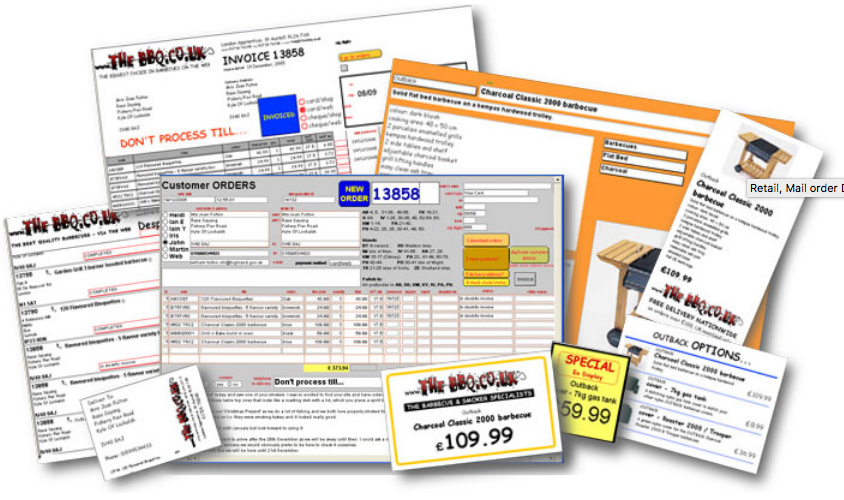
This is where I started. 20 years ago we were happy(ish) to collate invoices by hand. We had a standard invoice document in Word, which we cut and pasted and typed into, manually added up and calculated the VAT. It might take 15-20 minutes but we only needed to do a dozen or less invoices a week and each transaction was worth £100’s.
We then had the opportunity of selling individual items via our website. Trouble was an invoice could still take 10 minutes plus for an item worth £5. And when we were spending half a day processing small invoices we needed to amend our ways. So we did what everyone did – turned to spreadsheets. We could import in the data (well the line items), but the address was still cut’n’paste, but it added up automatically. A much better solution undoubtedly. But very quickly as we grew we hit the same bottleneck. And as for reporting on that data – well it was a non starter.
Our IT whiz suggested a relational database. Which I’d never heard of but in essence is joined up spreadsheets/tables.
You have a separate table for everything; customers/addresses, invoices, invoice line items, suppliers, stock items, orders, order line items…
Everything is joined up by a relationship. So the customer could have one or many items they bought. Each item came from a particular supplier. In fact some items could be sourced from many suppliers….
Then logistics and workflows get automated. For example: a widget was chosen from a prescriptive drop down list, which automatically pulled in the price from the stock list. Also running in the background, when a widget was sold, was the script:
- go to the stock table, find that widget, deduct the number of widgets sold from stock,
- if it’s less than the field:Min_Stock, get the number from the field:Min-Reorder and email the supplier with a new order,
- make note to chase delivery if not delivered in 5 days.
Now that took the computer less time than it took you to read it, let alone enact it. OK in reality it didn’t do that every time a widget was sold. The script actually waited till the end of the day, found all items sold in the last 24 hours, then scrolled through every supplier collating their items to go on their order. It also compared the price of buying individual items against the discount got from buying bulk, and bought intelligently. So already we were saving a few hours a day.
So along with being far more efficient in looking up information, it evolved over time to do everything… invoicing, ordering, stock control, time sheets, scheduling, planning, reporting, sales & marketing materials, price lists, POS labels… It easily saved us the cost of the custom made database in the first year alone. And then went on saving us the same year after year.
As our business grew, changed, took on new disciplines, required new processes and ways of working, it easily adapted with us at our pace, when we needed it to.
So how much is your time worth?